Search filter
205 results found
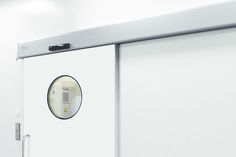
Hygienic Doors
… takes a top priority. GEZE Hygienic Doors satisfy the highest requirements for use in hospitals or in the food sector, for example.
Lock 2-leaf
… take top priority here: For double leaf emergency exit and panic doors, the GEZE product selection offers a range of self-locking panic locks.
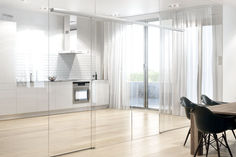
Levolan
Discreet appearance, small dimensions, outstanding functionality – with these premium attributes, the Levolan sliding door fitting fits smoothly into any installation situation.
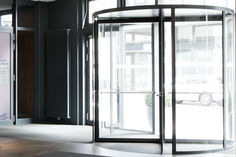
TSA 325 NT
Quiet, elegant and easily accessible – these properties make the TSA 325 NT manual revolving door system predestined for installation in façades with the highest design requirement.
Powerdrive
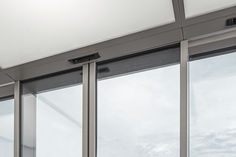
The name says it all: With an extremely powerful drive unit, the Powerdrive automatic linear sliding door system effortlessly lifts even large, heavy door leaves and ensures large opening widths.

Opening drives
Electric opening drives relieve you of the opening and closing of windows. Especially when mechanical ventilation requires too much manual force or is not possible at all.
Revo.PRIME manual
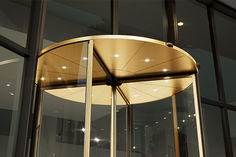
This door system plays the starring role when it comes to creative freedom and transparency in the entrance area of your building. A minimum canopy height of just 75 mm and a barely visible drive unit make this possible.
Why GEZE EZE BIM now?
… Taking quality to a new level … you book a ride online, your transaction is immediate. You get first-hand real-time visuals and data on where and who your driver is, how long the vehicle will take to get to you. If you want to quickly communicate with your driver, it’s made easy. And your paperless history of travel and cost data is available to you anytime. Result? Better matching means that Uber drivers earn more, because their software allows them to optimize their time and services. Given the choice, not only are more travelers switching to Uber, some are disposing of their vehicles to instead use Uber exclusively. Outcome? A complete real-time data-rich picture, transparent communication and a faster smarter result that builds deeper customer relationships. At GEZE SA we have developed a new way of working to help our clients gain an advantage Kevon Diamond, MD GEZE South Africa Why do it? The first BIM project is always the hardest – while it can take some time to get people to try something new and transition to a new process, at GEZE SA we’ve gone further to help customers to experience the benefits of BIM sooner. We know that Architects typically see doors, windows, facades, security and fire-safety as one of the most complex construction components. To simplify matters, GEZE EZE BIM empowers you to easily design and deliver a fully resolved door solution, eliminating the complexity of adding-on multiple parts from numerous sources. As a result, your solution and all its component parts inclusive of costs if you wish, is produced at the push of a button – perfectly and visually scheduled. Imagine
Self-closing doors: GEZE convenience for the AIDAluna
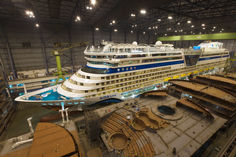
… take top priority on board On … April 2009, the AIDAluna concluded her maiden voyage across the North Sea and along the Spanish coast to reach Palma de Majorca, where she was officially named as part of a spectacular show. The state-of-the-art club ship offers her passengers a premium cruise ship experience with effortless convenience. Innovative door technology by GEZE ensures optimal ease of access to the cabins, restaurants and bars, or while taking a stroll around the decks. In response, marine-specific safety standards have been subtly integrated into the ship’s door design. AIDAluna in figures Dimensions: … and 10 offer maximum opening width, allowing sun-seekers to move comfortably to the sun deck and/or pool area, even with their arms full. Crew and staff also benefit from the well-thought-out GEZE door technology. The automatic swing doors, which are used as 'service doors', are equipped with individual activation technology and can be opened effortlessly or, for example, controlled and closed non-contact by radar sensors. GEZE door closers combine convenience and security on board The self-closing doors are fitted with door drives specially designed for maritime conditions. The doors to the 1,025 passenger cabins close comfortably and securely at all times, thanks to the special design GEZE TS 2000 door closers with levers and guide rails. Ultimately, safety takes utmost priority on board the club ship. The characteristic GEZE design is thus full integrated with on-board safety. Subsequently, all Class A fire protection doors (non-flammable materials) within the escape and rescue routes are equipped with overhead door closers: TS 4000 and TS 5000 for door widths up to 140 cm TS 4000 in a tandem design for very heavy and large door leaves In the event of danger, the overhead door closers close safely even if the ship is at an extreme incline, and therefore meet the guidelines of SOLAS, the international convention for the safety of life at sea. Full planning and implementation of the GEZE door technology was carried out in close collaboration with the Meyer shipyard, the AIDA Cruises shipping line and the competent classification association, in order to guarantee maximum safety and functionality. Manual sliding wall systems - flexible use of space In fitting out the AIDAluna, GEZE proved its expertise, not only as a complete supplier of door technology: GEZE glass sliding wall systems were fitted in the pool area on deck 11, for example. A customised corrosion-free manual sliding wall system (MSW) made of 20 glass elements arranged in a circle surrounds the DJ desk and protects all the entertainment and stage electronics. The DJ's desk can therefore be completely closed manually or opened as wide as as required with no great effort, depending on the kind of event. Trusted partners: GEZE and AIDA Cruises For over ten years, GEZE has been proving its expertise in the field of marine traffic technology at the Meyer shipyard. GEZE has supplied tailor-made door and safety solutions for all the cruise ships in the AIDA fleet. Following the AIDAluna, and its earlier sister ships the AIDAdiva and AIDAbella, GEZE also equipped the AIDAblu, which was officially named in Hamburg on
Green Building: Certified Green buildings
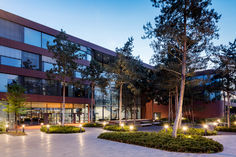
… takes the changing relations between people, the built environment and the ecosystem into account. The aim is to leave behind an intact world fit for habitation by future generations. The guiding principle of sustainability therefore ideally covers the whole life cycle of a building - from the project development and planning through to construction, operation, maintenance and disassembly. "Green" buildings are therefore characterised by a high-quality ecological design and superior resource efficiency in the areas of energy, water and materials. Damaging effects on health and the environment are reduced to a minimum. Smart Buildings – making intelligent construction possible ÖAMTC headquarters: intelligent planning delivers low operating costs © Sigrid Rauchdobler / GEZE GmbH In principle, green building also means “smart” building, the efficient use of energy and resources and of automated building technology to increase comfort and functionality. Intelligent buildings offer comfortable, environmentally friendly high-tech environments which are more productive to live and work in. In practice, the main focus is generally on energy consumption since property operating costs account for around 40 per cent of Germany’s entire energy demand. For example, if 50 per cent of older buildings were modernised for sustainability, carbon dioxide emissions could be reduced by 200 million tonnes per annum. New buildings all now have a focus on energy efficiency. For more Green Buildings: the European Green Deal The goal of the European Green Deal is to significantly increase environmental standards throughout the EU and reduce greenhouse gas emissions to zero by 2050. The regulations governing overall energy efficiency for buildings will also be harmonized with the European Green Deal, with the goal of decarbonising the construction sector in the EU by 2050. The reform to the Energy Performance of Buildings Directive (EPBD) resolved as part of the Green Deal stipulates, among other things, that residential buildings should reduce their energy consumption by 16 percent on average by 2030, and by 20 to 22 percent by 2035, for instance. This means that the construction industry, architects, and building operators must prepare for stricter environmental requirements, in particular with respect to energy efficiency, resource protection, and CO2 emissions. The CO₂ footprint of a building will become a primary criteria in all future investments and calls for tenders. This applies both to new construction projects and existing buildings. Energy-efficient planning and building energy renovations, as well as corresponding certifications, are therefore becoming more important in the construction sector. Certification for green buildings The Empire State Building, the most famous office building in the world, was fully renovated in 2009. Since then, it has been a model of sustainability and energy efficiency. It was awarded the LEED Gold Award in 2011, making it the largest building in the USA to receive a LEED award. LEED is one of the most well known certification systems for assessing the ecological, social and economic quality of buildings. Sustainable buildings are more valuable, with lower operating and maintenance costs. With their high quality evident to owners, tenants and users, they are easier to sell or lease. Certified buildings can be compared at both a national and at an international level. Demand for certified buildings is constantly increasing. Various certification systems for sustainable construction have been established in the international sphere. They rate buildings using a specific catalogue of criteria, but use different weightings and are based on typical national standards and regulations. The most well-known Green Building Rating Systems are the British certification system BREEAM (Building Research Establishment Environmental Assessment Method), the LEED certification system (Leadership in Energy and Environmental Design) from the U.S. Green Building Council, and the DGNB certification system (Deutsche Gesellschaft für Nachhaltiges Bauen e.V. - German Sustainable Building Council). These certifications allow building operators and owners to follow a structured procedure to take practical and measurable measures for the planning, construction, operation and maintenance of sustainable buildings. They are now applied worldwide. The GWP value will become binding for buildings Since buildings are responsible for a significant portion of greenhouse gas emissions, the GWP value of a building is another important indicator of its environmental compatibility. GWP stands for Global Warming Potential, and describes the greenhouse gas potential of a substance or a building. The GWP value of a building is calculated based on the construction materials used, the energy footprint and the building's useful life. The higher the GWP value, the more the building contributes to global warming. Starting in January 2027, calculation of the GWP binding will be required for new buildings over 2000 m², then for all new buildings starting in 2030. This means that building owners and architects will have to focus more specifically on the GWP values of buildings. EPD – Declaration of environmentally relevant product properties EPD certificate label Green Buildings use ecologically safe, low-emission materials. Information for the German market is provided by the construction material industry under the umbrella of the IBU (Institut Bauen und Umwelt e.V.) using Environmental Product Declarations, or EPDs for short. An EPD provides quantified environmental information on the life cycle of a product to enable a comparison with products with the same functions. An EPD is based on independently checked data from ecological life cycle assessments, specialist assessments or information modules which comply with the ISO 14040 series of standards. The German Institute for Construction and the Environment (IBU) and the Institute for Window Technology in Rosenheim are publicly recognised facilitators of the programme in Germany, and create and publish EPDs for the construction sector. The procedure for the production of EPDs since 2005: Manufacturers create an ecological assessment for their product and present this data as an EPD in accordance with the European standard. The IBU has the information checked by independent experts and the EPD is then published. EPDs describe construction materials, products or components in relation to their effect on the environment based on the ecological assessment, and their functional and technical properties. This information relates to the whole life cycle of the construction product. The energy consumption needed for manufacture and the emissions this causes, the durability, and the capacity for dismantling and recycling are identified. EPDs form the foundation of data for the sustainability assessment of buildings, for example through the BREEAM and LEED international assessment systems, or the systems operated by the DGNB (German Sustainable Building Council) or the Federal Ministry of Construction. The three biggest certifications for Green Buildings The certification systems examine and certify the sustainability of whole buildings. The German DGNB Seal and the American and Canadian LEED certificate are currently battling to be considered the most comprehensive certification system. For example, Deutsche Bank decided to have all its company buildings, and especially newer buildings, certified according to DGNB and LEED so that it can compare its international property portfolio. All three labels follow the same basic procedure. Buildings aiming for the award must meet a very complex catalogue of requirements. Various criteria are assessed using a points system and assigned to the building. An assessment is produced from all of the categories and sub-categories which indicates how sustainable the building is. The GWP value is taken into consideration in most Green Building certification procedures. Buildings with a lower GWP value have a better chance of receiving a Green Building certification and achieving a higher assessment. The most important Green Building assessment systems: BREEAM, LEED, DGNB Building sustainability has become increasingly important in recent years. Certification systems for sustainable buildings are gaining recognition, alongside the development of new criteria and assessment systems. A building certificate is awarded when the quality requirements specified and published by an organisation have been met. These certifications are primarily used for quality assurance and to publicly communicate that the respective label has been obtained. Investors, owners, tenants and users can assess the quality of a building based on its certification. The three selected seals are difficult to compare since factors are weighted very differently. BREEAM BREEAM stands for the Building Research Establishment Environmental Assessment Method. It is the oldest and most widespread certification system for sustainable construction. It was developed in the UK in 1990. BREEAM uses a simple points system to award a quality seal at four levels in eight assessment categories. The criteria take the effects at global, regional, local and interior design level into account. BREEAM originally assessed the phases from planning through to implementation and usage. The procedure was completely revised in 2008 and now takes the whole life cycle into account, including adjusted weighting of the environmental effects. Mandatory points have also been introduced. Assessment categories Management Energy Water Land consumption and ecology Health and wellbeing Transport Material Pollution Application area Renovation and new construction Wide range of building types such as offices, public buildings Industry Residential buildings and estates Assessment: excellent, very good, good or average LEED The US LEED system (Leadership in Energy and Environmental Design) was developed in 1998 on the basis of the British BREEAM certification system. Certification was introduced in Canada in 2002. The requirements of the American system were transferred, and individual details relating to the climatic conditions, standard construction methods and national legislation were amended. Buildings are assessed by awarding points for individual criteria. The sum of the points awarded determines how the construction is classified during certification. LEED relates to all phases of the life cycle. The United States Green Building Council (USGBC), headquartered in Washington, and the Canada Green Building Council (CaGBC) in Ottawa, are responsible for the system and its further development. Assessment categories Sustainable land and soil Water efficiency Energy and atmosphere Materials and resources Interior design quality Innovation and design process Application area New buildings Existing buildings Core and building envelope Interior equipment for general and office administration Retail industry Residential buildings Urban development Schools Health and care facilities Assessment: Platinum, Gold, Silver and Certified DGNB In 2009, the first buildings in Germany were awarded the German Sustainable Construction Quality Seal from the German Sustainable Building Council (DGNB, itself founded in 2007). The DGNB developed its own certificate for Germany to close gaps in the existing systems and to introduce additional quality criteria which take German standards and regulations into account. The system builds on the life cycle analysis (LCA) and takes the ecological as well as the economic and socio-cultural aspects into account - i.e. all three pillars of sustainability. Technology, process and site location also play a role in the planning and construction of the building. The certificate also takes regional characteristics and construction materials into account. To achieve even the lowest level of certification, buildings need to far exceed the legal standards. Assessment categories Ecology Economics Social and functional aspects Technology Processes Location According to the building type, up to 40 sustainability criteria - which are continuously developed by independent panels of experts - are included in the assessment. Application area: The certificate has been designed for all types of existing buildings and new buildings, from commercial skyscrapers, to family homes and infrastructure such as tunnels and bridges. Ratings: Platinum, Gold, Silver and Bronze, and the special Diamond award. Online databases for green construction products Construction products significantly contribute to the sustainability of buildings. If planners or owners wish to gain certification, they need to schedule products which meet the certification requirements. Online databases help with product research and verification of the certification body. Manufacturers can document their commitment in the area of sustainability. IBU.data A database provided by the Institute for Construction and the Environment (IBU) which provides the ecological data from the environment product declarations (EPDs) in XML format. The EPDs can thus be used to calculate a building’s ecological assessments. DGNB Navigator The DGNB Navigator also lists construction products which feature environmental product declarations (EPDs) as well as complete information. The DGNB navigator builds a bridge between construction products and the DGNB certification system for buildings by providing the required data for building certification. greenbuildingproducts.eu A database for products which have been assessed according to DGNB, LEED or BREEAM criteria. The product database provides construction professionals with the required information and verification documents for the individual products in a pre-prepared form. The advantages include: Time-saving when researching products and collating evidence, planning security for Green Building Projects, and provision of all relevant evidence documents. building-material-scout.com Service platform for green building projects. The BMS offers a comprehensive tool for the planning and implementation of Green Buildings - from the automated evaluation of products according to the common sustainability criteria DGNB, LEED or BREEAM, to the simple and fast search for products with all relevant supporting documents, to the project documentation. Greener building with GEZE Drives and controls from GEZE for sustainable construction © Exorbitart / GEZE GmbH GEZE supports sustainable building as an active member of the Institute for Construction and the Environment (IBU) and of the German Sustainable Building Council. From product development and production through to sales, maintenance and after-sales service, GEZE works according to the latest environmental standards. Our quality management system is certified according to the DIN EN ISO 9001 standard. The longevity of GEZE products is evidence of their sustainability. With a high proportion of metal raw materials, GEZE products are highly recyclable and so Exceptionally environmentally friendly. They also make an important contribution to energy-saving buildings. GEZE automatic door systems close reliably, reducing the loss of warm or cold air through the door opening. The automated window systems are also part of the aeration and ventilation system, which uses fresh air and the effects of wind and thermal technology. This is also taken into account for the EU-valid lowest energy standards, which are stipulated by the Energy Saving Ordinance in Germany. Intelligent drives with the latest controls from GEZE ensure aeration at the push of a button. They can also be combined with sensors which automatically open and close windows when needed. Natural ventilation and cooling at night also help to naturally cool buildings and to reduce the use of air-conditioning units. GEZE supports sustainable energy concepts with networked system solutions and the integration of GEZE drives into building technology or building management systems (which coordinate and monitor the window systems). The myGEZE Control building automation system for smart door, window and safety technology plays an important role in saving energy and makes buildings smart and green. GEZE products satisfy LEED and DGNB criteria GEZE products provide evidence of compliance with DGNB and LEED criteria via the EPDs and are therefore listed in the DGNB Navigator and greenbuildingproducts.eu online databases with the respective certificates. The certificates provide evidence of the number of points which a GEZE product can contribute to successful DGNB or LEED certification of a building. GEZE thus supports its clients in achieving Green Building certification. Sustainability at GEZE Sustainability is more than just a strategy for us. We take on a responsibility to people, the environment and our region. More about sustainability at GEZE Award-winning green architecture All over the world, green buildings are increasingly in demand, leading to a surge in construction. Over 130 buildings have already been awarded the DGNB certificate or a pre-certificate in Germany. Kö-Bogen II receives the highest Platinum and Diamond DGNB certifications The commercial and office building Kö-Bogen II in Düsseldorf stands out not only for having Europe's largest green façade: in addition to the DGNB platinum - certificate, the Kö-Bogen II is the only building in the world to receive a DGNB diamond distinction - a shining success, including for the environment. © Jürgen Biniasch / GEZE GmbH Vector Informatik The Vector company building was awarded the Platinum level of the DGNB certificate for sustainable construction and the DGNB Diamond level for excellent architecture and special design and construction quality in 2017. © Jürgen Pollak / GEZE GmbH Milaneo Shopping Centre Stuttgart GEZE equipped the shopping mall with the latest door and safety technology. It was awarded the Gold level of the pre-certificate by the German Sustainable Building Council (DGNB). © Jürgen Pollak / GEZE GmbH DGNB member As a member of the DGNB, the sustainability of buildings is very important to us. We advise on new builds as well as the modernisation of existing buildings. You can find additional information on our testimonials here: Go to the GEZE Vector Informatik GmbH headquarters case study Go to the GEZE Milaneo shopping centre case study Planning Installation Services Planning Installation Services Certified products facilitate planning Transparent and evidence-based representation of product properties (EPDs) is important to GEZE. GEZE products satisfy DGNB and LEED criteria. This is increasingly important for architects when planning energy-efficient green buildings. GEZE provides support for planning and creating Green Buildings - both for new builds and for the renovation of existing buildings. GEZE product sustainability From product development and production to sales, maintenance and after-sales service, GEZE works according to the latest environmental standards. The GEZE environmental management system is certified in accordance with the international standard DIN EN ISO 14001. GEZE supports sustainable building as an active member of the Institute for Construction and the Environment (IBU) and of the German Sustainable Building Council. The sustainability of all GEZE products and systems is already evident in their long service life, which is based on premium material and production quality. For example, we were able to implement process automation with minimum amounts of lubrication and so avoid using cooling lubricants. Only a very small amount of an air-oil mixture is needed. This ensures sustainable, efficient and economic conditions at all GEZE production sites worldwide. In addition to the positive aspects of eco-balance, the door closers are already long-lasting due to their functioning. They prevent doors from being left open unintentionally and contribute to the energy efficiency of the building. Transparent information on products and production Sustainability is one of our guiding principles. From product development and production through to sales, installation and after-sales service, we operate according to sustainability standards. Our high-quality products coupled with our comprehensive consultation and support in all the construction phases are of valuable assistance to our customers and partners. They make the planning of sustainable buildings and their increasingly important certification in a growing green building market easier. We attach great importance to providing transparent information about our products and their environmental data. GEZE products TSA 325 NT TSA 325 NT Automatic revolving door drive for three- or four-leaf doors with large area of application Go to product Related topics Topics | Building renovation Building renovation You can increase the comfort, the security and the energy efficiency of your existing properties through building renovation works. GEZE supports you in this with the right products. Read more Topics | Energy efficiency | Sustainability Energy efficiency in buildings Energy efficiency is of major significance for architects, planners and users. Because a large proportion of the total consumption of end-use energy costs is accounted for by buildings. GEZE provides energy-saving and sustainable solutions for door, window and safety technology. Read more Topics | Energy efficiency | Security | Smart Facade Smart façades Smart façades react actively and independently to their environment. The aim is to lower energy requirements to a minimum and to increase convenience and safety for the user. Read more