Search filter
58 results found
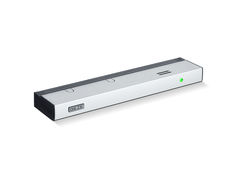
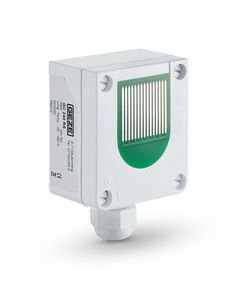
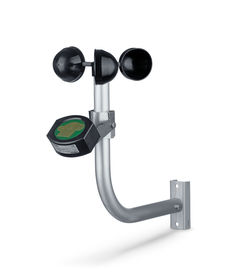
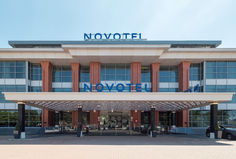
GEZE products for the Novotel Heathrow
… raises the bar within the sector. It is a hotel with many fabulous features that clearly demonstrates that affordable luxury is achievable. Andy Howland, Sales and Marketing Director at GEZE UK Automatic sliding doors at the hotel entrance - at their best with a GEZE Slimdrive It’s all about first impressions, especially for hotels that firstly want to impress their guests, and secondly also want to welcome them conveniently and accessibly. Therefore, a good hotel needs functional, safe doors, but ones that also fit with the design and support guest convenience as 'invisibly' as possible. GEZE Slimdrive SL NT is perfect for these demands: an automatic linear sliding door system for emergency exit routes, which is also ideal for glass façades with the highest design expectations. With a height of just
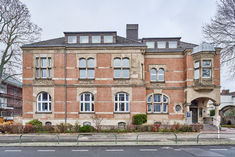
Wireless fire door holders
… raised the question: how best to meet the special demands placed on fire protection doors with fire door holders in this listed historic and architectural gem? Because of the high ceilings and the space between the lintel and the ceiling far exceeding one metre, additional ceiling-mounted smoke detectors were needed on both sides of the door. Additional cable guides in the ceiling are normally unavoidable in this scenario. Building operators, door constructors and planners thus faced the challenge of leaving historic ceilings – some of which have beams – untouched. An example of the installation: no separate cable laying, no knocking-through of walls. © GEZE GmbH The solution: a wireless extension for fire door holders The GEZE FA GC 170 wireless extension has the great advantage of not needing any additional cables. Cable connections between lintel-mounted and ceiling-mounted detectors and/or manual trigger switches are unnecessary, making installation, retrofitting and reconstruction much easier. Easy wireless extension installation for fire door holders GEZE Service found it easy to attach the additional fire detectors needed for fire protection to the ceiling. All components of the FA GC 170 wireless extension for fire door holders were connected to the existing door closer system via a wireless module. FA GC 170 is therefore an optimal retrofit solution: ceiling-mounted smoke detectors and trigger mechanisms can also be connected without cables to the wireless module on the lintel-mounted detectors of other fire protection closers in the building – with no expensive cable-laying construction work needed. Go to the wireless kit FA GC 170 Installation of the fire protection doors could not have been simpler or quicker. They also needed to be accessible, and kept open if necessary. The GEZE wireless fire door holders meant that no walls had to be knocked through for cables to the additional ceiling-mounted smoke detectors which the high ceilings called for. We were able to leave the structure of the listed building intact, use a secure and approved system, and save effort and costs as well. Gerhard Kämper, in-house technician and renovation co-organiser DIN-tested wireless extensions with general construction technique permit FA GC 170 wireless extension for fire door holders We offer a unique solution for fire door holders with wireless components, tested to the European DIN EN 54 25 standard for fire alarm systems. Thanks to the innovative GEZE wireless extension with a general construction technique permit (DIBt) for GEZE fire door holders, alternative extension solutions and extension solutions which did not meet guidelines and approvals could be avoided, as well as the associated project-related, costly and time-consuming approval and permit processes. The FA GC 170 wireless extension for fire door holders guarantees: testing in accordance with the European DIN EN 54 25 standard for fire alarm systems wireless extension system with a general construction technique permit (DIBt) for GEZE fire door holders low maintenance costs, thanks to a long battery life of eight years Individual service concepts for door closer systems and fire protection There’s one key thing that meant we at GEZE were able to make a major contribution to ensuring optimal fire and smoke protection closer solutions: maintaining constant contact with our customers and partners. We maintain continuous discussion with them about the challenges of upcoming and future projects so that we can contribute our expertise and experience in the different building types and uses right from the beginning – and so deliver the best solution. Working together to connect expertise for the optimal solutions We involved all the trades from the earliest stage of the project. This made sure that no requirements or issues were forgotten, no inspiring idea was ignored, and processes could go hand-in-hand in an efficient network. For this historical building with its specific circumstances, we worked with the door experts of Dömer Metallbau GmbH in Nordwalde to implement manual and automatic fire protection doors and a wireless extension of the fire door holders with wireless detectors. Comprehensive service for door systems from GEZE Our service does not stop with the delivery of the wireless extensions: we support accessible fire protection doors and door hold-open devices throughout their entire life cycle with customised service and maintenance of all components. GEZE offers its ‘comprehensive hassle-free package’ for all door closer systems, promising consistently high availability reliably safe operation value retention and extended service life GEZE Products in the ‘industrialist’s villa’ building in Dortmund Manual and automatic swing doors with smoke switch (integrated and invisible): TS 5000 door closer and Slimdrive EMD-F/R swing door operating systems FA GC 170 wireless extension - Elements per door:

Building automation makes buildings ‘smart’
… raise or lower blinds, and open and close windows and doors. And they do all this while responding precisely to users’ or residents’ needs as they pass through the building. When they leave the building, energy consumption is automatically reduced to a minimum, accesses are locked and the alarm system is activated. This type of automation technology is now installed in all new public buildings and commercial properties. Older, existing properties are also optimised. The key phrase is definitely building automation. Automation means any action not performed by a human that affects a device or system. Building automation (BA) refers to the sum of equipment used for automatic control, regulation, monitoring and optimisation in buildings. This means that all the sensors, actuators, operating elements, consumers and other technical units in the building are networked. Building automation then automatically performs specific functional processes as part of the building technology, in accordance with the prescribed settings. Technical building equipment, which can often be complex, is therefore efficiently and centrally managed. The goal is to make building operations more energy-efficient, economical and safer, and to offer maximum comfort to users and residents. Structure of the building automation in accordance with DIN EN ISO 16484 The management level monitors the system and optimises its operation using special software - a building management system. The software visualises and saves information and data. The automation level handles the collation and evaluation of information. Switch and positioning commands are sent back to field level. However., they can also be transferred to all of the other levels in the command level. The field level involves the execution of all functions and measurement and reporting of data. This data comes from sensors (for example temperature sensors, air quality sensors, luminosity sensors, movement detectors, window contacts, wind speed sensors, rainfall sensors) and actuators (servo motors for valves and flaps, switch and dimming equipment for the lighting, drives for sun shades, windows and doors) and other push buttons and switches. To transfer information from the sensors or positioning commands to actuators, the devices need to be linked in a shared network. Download white paper You can learn more about building automation and its influence on sustainability in our white paper. Download white paper on building automation now EU Regulation on the overall energy efficiency of buildings The EU regulation on the overall energy efficiency of buildings is the driver behind building automation. After all, 40 per cent of total energy consumption within the EU is within the building sector. According to the EU regulation, the overall energy performance of all buildings needs to be improved. This is primarily dependent on the thermal envelope and the nature of the technical building equipment. The facilities can also be further improved by installation of an automation system. A study at the Biberach University of Applied Sciences ('Ensuring energy efficiency via building automation with respect to DIN V 18599 and DIN EN 15232') examined how much energy the individual functions in a building automation system can save. Among the study results, it was found that automated lighting in combination with a light-directing external blind produced a savings potential of around 40 per cent. If investment costs and savings are compared, the result is an average amortisation time of two to ten years for building automation systems. In summary, the study identified that building automation could make a big contribution to the energy efficiency of a building. It has therefore been scientifically confirmed that normal user behaviour often leads to unnecessarily high energy consumption. Automation as an 'ideal' user 'Ideal' users would need to turn the heating off when they ventilate rooms, and then close windows as quickly as possibly again. Additionally, they would turn lights on only if the room is being used, and then use only the number of lights needed. In unused rooms, and usually at night or on public holidays, they would noticeably decrease the air temperature in offices. Since these types of ideal users are very rare – indeed non-ideal users forget about open windows and leave them open overnight - this gap can be significantly closed with the help of building automation. Smart Buildings therefore behave in a more energy-efficient way than people. Automated ventilation for better indoor air and greater hygiene Building automation can improve not only energy efficiency, but indoor air quality too. This is because smart window systems that are networked with the building management system enable automated, natural ventilation . This allows rooms to be ventilated as needed and supplied with fresh air – completely contactlessly thanks to smart window automation. This avoids physical contact and thus the possibility of transmitting germs and viruses. A further advantage: regular air exchange improves indoor air quality – this is good for concentration and reduces the concentration of aerosols, thus also reducing the risk of infection from viruses. Smart Building and Smart Home Smart Building technologies are a growing market. © Exorbitart / GEZE GmbH Smart Building Systems are not only used in office and industry buildings, hotels or hospitals, however. There is also growing interest in automation technology for homes. ‘Smart Homes’ are those where the power supply and consumption controls are networked with household devices and lighting. Home networks with entertainment electronics, monitoring and safety systems, blinds, window and door closer systems can also be connected. These functions can be adapted to the individual needs of users and therefore ensure increased comfort. They also help to save costs and to save on resources. Find out more about Smart Building What is BACnet? BACnet stands for Building Automation and Control networks. It was developed in 1995 under the auspices of the American Society of Heating, Refrigerating and Air-Conditioning Engineers (ASHRAE) as a higher-order protocol in building automation. BACnet has been documented in ISO 16484 Part
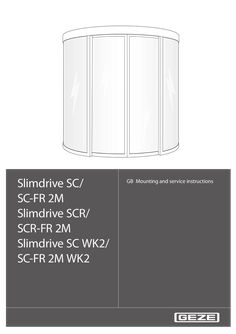
… raised ceiling ring. XX Use hoist units in the passage area and raise the ceiling ring (8) at least 40 mm over the side element height. � … .3 Slimdrive SC/Slimdrive SC-FR 2M Mounting the roof Warning! The roof is very heavy. XX Wear a hard hat when lifting the roof. XX Lift the roof only by means of suitable aids (e.g., pneumatic press). XX Do not stand under the raised roof. àà The hoisting height for placing the roof must amount to at least 120 mm above the side elements. XX Place the roof (1) on the side elements. � ��� �� ���� � 24 � Slimdrive SC/Slimdrive SC-FR 2M XX Mounting Pre-drill the drive unit of the roof and the side closing edge (2) and cut the thread (M6). � Position of the fixing screws Top view (sectional view) Side view (sectional view) ��� � ��� �
… raised ceiling ring. XX Check the weight and weight distribution in the ceiling construction before lifting! XX Use lifting tools adapted to the weight of the ceiling construction. XX Use lifting tools (2) in the passage area and raise the ceiling canopy (1) at least … .13 Lifting the ceiling canopy WARNING! The ceiling canopy is very heavy (approx. 200 kg). Risk of injury due to falling ceiling canopy. XX Only lift the ceiling canopy by means of suitable aids (e.g. pneumatic press). XX Do not stand under the raised ceiling ring. XX Check the weight and weight distribution in the ceiling construction before lifting! XX Use lifting tools adapted to the weight of the ceiling construction. 72 Revolving door TSA 325 NT Revolving door TSA 325 NT RC